
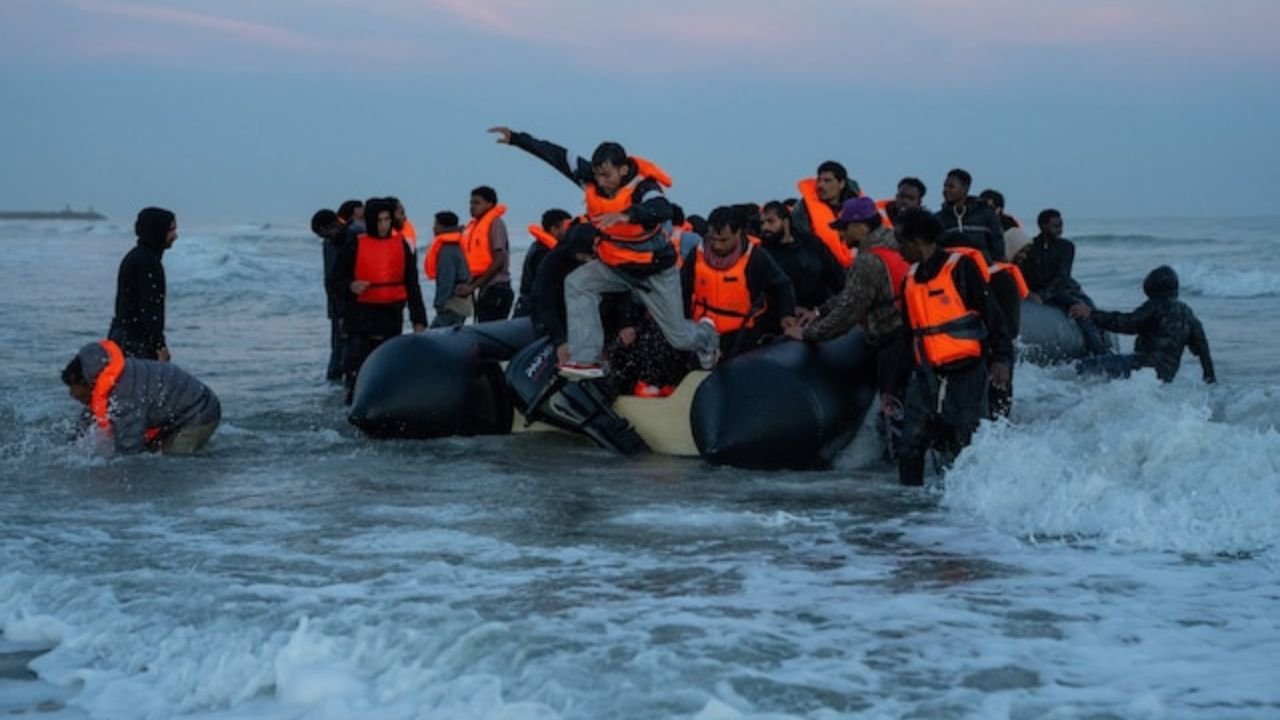
A migrant dinghy carrying around 60 people was intercepted in the English Channel on Tuesday, September 22, after spending more than 33 hours at sea on a journey toward the southern coast of England.
The vessel had reportedly left the Normandy coast in France on Monday and traveled an unusually long route toward the UK. French maritime authorities monitored the boat during its journey, while British rescue crews were later dispatched as it approached UK waters.
RNLI lifeboats from Eastbourne and Hastings were among the vessels involved in the operation. The passengers were removed from the dinghy because of concerns about their safety and deteriorating condition before being transferred to a UK Border Force vessel.
Quick Guide
| Topic | Details |
|---|---|
| Incident date | September 22, 2026 |
| Location | English Channel, near the southern UK coast |
| People aboard | Around 60, according to French maritime authorities |
| Time at sea | More than 33 hours |
| Departure area | Normandy, near Vierville-sur-Mer |
| Rescue response | RNLI, HM Coastguard, French maritime authorities and Border Force |
| UK destination | Passengers were transferred to Border Force for processing |
| Wider issue | Ongoing small-boat crossings across the English Channel |
Rescue Operation Underway After Long Channel Crossing
French maritime authorities said their maritime rescue coordination center monitored the small boat from Monday morning into Tuesday.
The dinghy was believed to have departed near Vierville-sur-Mer, west of Bayeux in Normandy. Departures from that part of the French coast are less common than crossings from areas farther east along the Channel.
A French coastguard vessel, Abeille Liberté, shadowed the boat during the journey. As the vessel moved closer to the UK, British rescue resources were mobilized.
The Maritime and Coastguard Agency said the RNLI was tasked with collecting the people aboard and transferring them safely to Border Force. The RNLI later said HM Coastguard had directed its crews to remove the passengers from the dinghy because of concerns about their safety and worsening health.
Reports said the people aboard had spent more than 33 hours at sea in difficult conditions.
The passengers were subsequently transferred to a Border Force vessel. Later reports indicated they were being taken toward Dover for processing rather than being brought ashore in Gosport.
Why Gosport and the Isle of Wight Became Part of the Response
The incident attracted attention in Hampshire and on the Isle of Wight because the boat was approaching the area.
Police officers were deployed in Gosport and Portsmouth as authorities prepared for the possibility of the vessel arriving in the region. Hampshire and Isle of Wight Constabulary said officers were working with partner agencies, including the Maritime and Coastguard Agency and Border Security Command.
Local officials had expressed concerns about the potential impact of another migrant arrival on policing and emergency resources.
The situation also drew protesters to Gosport and Portsmouth. Hampshire police said some people who remained in Gosport became hostile toward officers after it became clear that the vessel would dock elsewhere.
Six people were arrested over offences including careless driving, assaulting an emergency worker and aggravated trespass, according to police. The force said its investigation was continuing.
2026 English Channel Crossing Numbers
The September 22 incident comes as the UK continues to record small-boat crossings despite a year-on-year decline in arrivals.
Figures reported from the Home Office showed that about 17,480 people had arrived in the UK by small boat during 2026, a figure that was around 46% lower than at the same point in 2025. The figures are provisional and can be revised as operational data is updated.
The government’s official weekly data also shows that small-boat activity continues to fluctuate considerably from week to week. For the week ending September 13, 143 people were recorded as arriving, while 100 people were recorded as having been prevented from crossing in two prevention events.
Because these figures are based partly on provisional operational information, individual totals can change.
Recent Small-Boat Incidents Add to Local Pressure
The latest operation followed several other Channel incidents involving the southern English coast.
On September 6, more than 150 people were intercepted in the Channel and brought ashore at Eastney Beach in Portsmouth. The arrival was followed by protests and a significant police response.
Another small boat earlier in September also required assistance from lifeboats after traveling from the French coast toward the Isle of Wight and Portsmouth area.
The September 22 operation was notable because the latest vessel had traveled from a more westerly departure point in Normandy and remained at sea for an unusually long period. French maritime authorities described the boat as unsuitable for such a crossing and said those aboard had become weakened after spending more than 33 hours at sea.
Border Security Remains a Major Political Issue
The latest crossing came one day after another small boat reached the Kent coast without being intercepted at sea.
Five people were detained after reaching the Folkestone area on September 21. Reports described the incident as the first known unescorted small-boat landing on the UK coast since September 2025. The Home Office said an investigation was underway.
The incidents have added to political debate over border security and the government’s approach to Channel crossings.
Defence Minister Luke Pollard said the government had not lost control of the border and that an investigation would examine how the Folkestone boat reached the coast without interception.
At the same time, anti-migration groups have continued to organize demonstrations around ports and locations where people rescued from Channel crossings may be processed.
The protests have created additional challenges for police and emergency services. Hampshire police said its officers were deployed partly to support peaceful demonstrations and protect the public while partner agencies dealt with the maritime operation.
RNLI Volunteers Face Increased Attention
The role of the RNLI has also become part of the wider debate.
RNLI crews are responsible for maritime search-and-rescue work and can be called upon when people are in danger at sea, regardless of the circumstances that led them onto the water.
During recent protests, some RNLI volunteers involved in Channel rescue operations faced criticism and harassment. The issue has generated support from members of the public who argue that lifeboat crews should be able to carry out emergency rescues without being drawn into political disputes.
The September 22 operation again highlighted the distinction between maritime rescue and immigration enforcement. RNLI crews were involved in removing people from a vessel because of concerns for their safety, while Border Force was responsible for the subsequent transfer and processing.
What Happens Next?
The passengers rescued from the dinghy were transferred to UK authorities for processing after the maritime rescue operation.
The incident is likely to remain part of the wider discussion surrounding Channel crossings, border enforcement and the resources required by coastal communities and emergency services.
For residents in Hampshire and on the Isle of Wight, the operation also demonstrated how quickly a Channel crossing can become a multi-agency response involving French maritime authorities, the UK Coastguard, RNLI crews, police and Border Force.
Although overall small-boat arrival numbers reported for 2026 are lower than at the same stage in 2025, individual crossings continue to create complex rescue and border-management operations.
The September 22 incident therefore illustrates two separate but connected issues: the immediate need to protect people in danger at sea and the longer-running UK debate over irregular migration and Channel border security.